![[k]eine produktion](/logo/wordmark-nodots.svg)
![[k]eine agentur](/logo/wordmark-agentur-rot.svg)
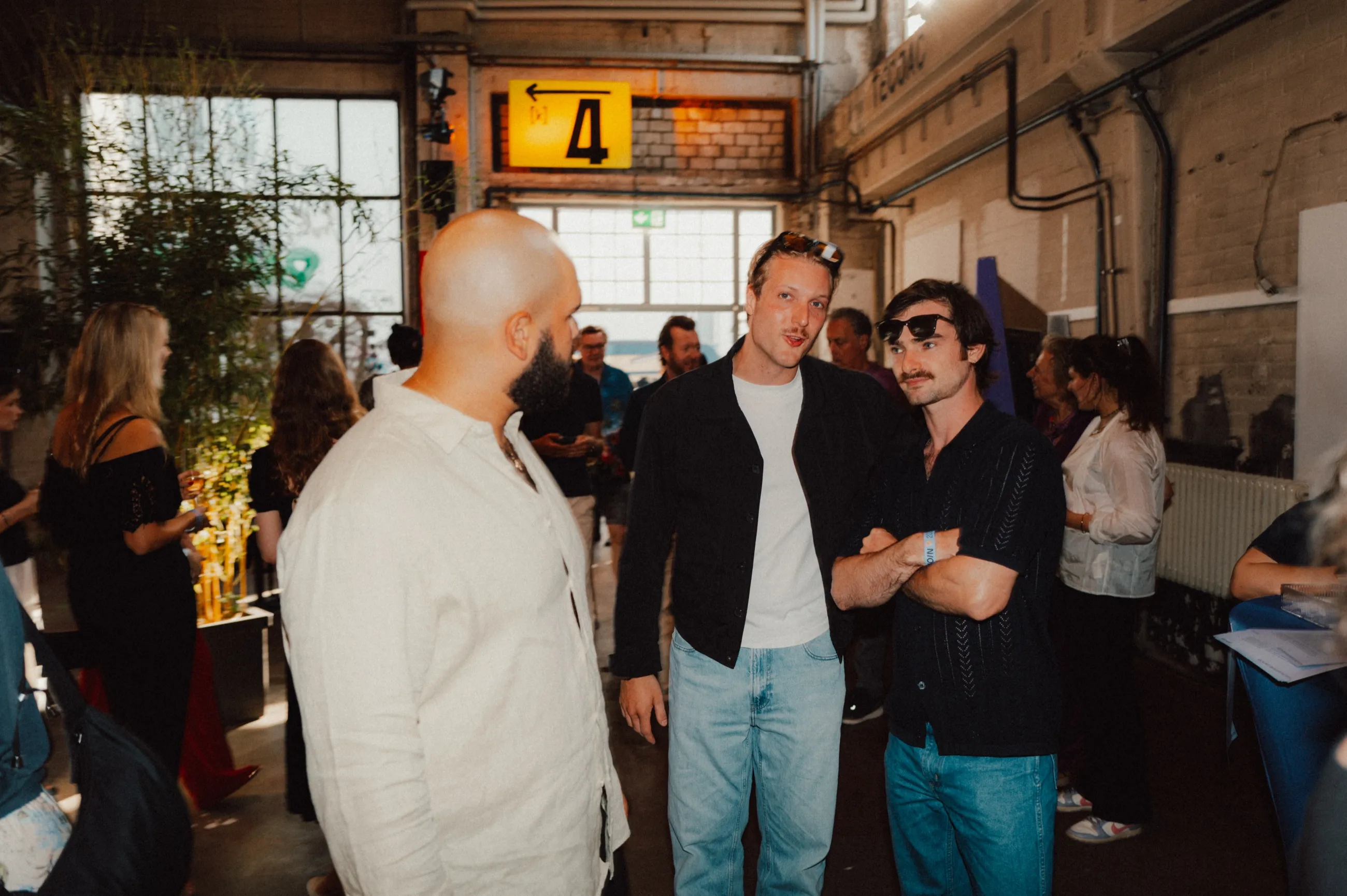
From 7 to 10 July the cinema industry met at the CCH, and for the first time in this form. Christine Berg of HDF KINO and Peter Schauerte of the AllScreens association have merged what ran separately for years. Distribution and exhibition, technology and services, all under one roof. More than 1,500 participants, more than 70 exhibitors, four days of programme. Berg called it a historic step in her opening remarks, and for once that was not an overstatement but simply a description of who was sitting in the room.
CineHamburg 2026: What Audiences Actually Want From Us
Four days at the CCH, 1,500 people from the exhibition business and one insight that reaches well beyond cinema. Anyone who wants to reach an audience has to stop advertising the product and start serving a need.

I. A congress that did not exist before


We were there for all four days. Not for the receptions, but for the panels and the studies. What we took away has more to do with our work as a production and marketing company than the title of a cinema congress might suggest. Because at its core the whole thing came down to a single question. How do you reach people who are open to something and still do not show up.
II. Nobody here says „cautious“ any more
The opening panel had an international line-up. Tim Richards of Vue Entertainment, Nick Rush of Disney, Gregory Theile of KINOPOLIS and Toby Tennant of Warner Bros., moderated by Steven Gätjen. The mood there was considerably better than the crisis reports of recent years would lead you to expect. One of the panellists put it plainly: he sits on a lot of these stages and for years he used the word „cautious“. He does not use it any more.
The reasoning is interesting because it overturns a widely held assumption. The audience never went away. What was missing were films. In the years after the pandemic, records were broken in almost every target group despite a thin slate, and by now global production is at a level never seen before. On top of that come the new financiers. Amazon, Apple and Skydance are pushing into the cinema business, and David Ellison is raising the number of Paramount films from seven or eight to fifteen or sixteen a year. The explanation is unromantic and therefore credible. These corporations are not coming to cinema because they love cinema, but because a theatrical release is simply the most profitable way to monetise a film.

III. The window and the pressure on opening weekend
On the subject of release windows things got concrete. At CinemaCon 2026 all the major studios committed to 45 days of exclusive theatrical release, and Disney goes further still. The panel agreed that this is progress, but disagreed on whether it is enough. Some consider 45 days sufficient, others want at least 60. More important than the exact number, they said, is reliability, for the industry as much as for the audience.
For us the most striking sentence was a different one. The shorter the window, the higher the pressure on the opening weekend. If you only have 45 exclusive days, you have to get everything right at the front. That is not a piece of cinema wisdom, that is a marketing statement. It shifts budget, attention and work forward, into the weeks before release and into that first weekend. For distributors and producers it means the campaign is no longer a supporting act. It is the lever.


IV. Who will still be sitting in the auditorium
The keynote „Who will still be sitting in the cinema tomorrow“ was the least comfortable part of the four days. Germany is shrinking. By 2070 the population will fall from 83.6 to 74.6 million. If the industry does nothing, it loses 14 to 17 percent of admissions through that alone. Not through bad films, not through streaming, but through demographics.
The only age group that will grow until 2050 is the over-60s. 25 million people, of whom only 14 percent are currently reached by cinemas, even though together with people in their thirties they have the highest visit frequency of any age group. They grew up with cinema, they have fond memories of it, and after their working lives they have time. One exhibitor told us about his Best Ager series: launched in 2024 with 45 visitors, those screenings now account for around 40 percent of his daily admissions. What he shows are not the current releases, but the films that are about to drop off the schedule.
The decisive point about this is not the price. The same cinema ran a general weekday deal at the same low ticket price in parallel. It did not work at all. The difference lies in how people are addressed. They need to feel that something was made especially for them. On Best Ager day that is the case, with an anonymous discount it is not. Add to that the personal welcome at the door, which sounds trivial and still makes the difference, because loneliness is a real issue in that generation. If you know someone you recognise will be standing there, you are more likely to come on your own.
The second big blind spot is people with a migration background. An estimated 15 to 18 percent of the population, and the industry knows next to nothing about their cinema habits. These groups are barely reachable through media spend, but they are reachable through local multipliers. Through cafés, through clubs and associations, through the people a community already listens to. That is handwork, and that is exactly why it is interesting for a small company like ours.

V. The sentence that holds it all together
On the second day Norina Lin-Hi of the FFA and Susanne Aleixo of Ipsos presented their study. It is called „Why audiences stay away from cinemas“, and it has changed how we look at campaigns. 77 people were interviewed for at least an hour each, with the focus on those who precisely do not go to the cinema.
The central figure: 54 percent of non-visitors would in principle be willing to go to the cinema. Among the under-49s it is more than 60 percent. So the problem is not a lack of interest. The problem is that these people are waiting to be picked up, and nobody is picking them up. They do not go looking for films, they expect a prompt. And when they talk about cinema, they talk about screen size and sound, which is to say about technology. They do not see the emotional payoff. Which is why the effort never adds up for them.
From this follows the sentence we have been using in every concept meeting since: it is not the measure that belongs at the centre, but the need it serves. You do not advertise the cinema, the genre or the technology. You advertise the need the film meets. „Do you want to laugh? Do you want to cry? Have you had a rough day?“ beats „Drama, 128 minutes, Dolby Atmos“. That holds for the trailer, the poster, the social cut and the streaming tile just as much as for the auditorium.
A second thought from the study is almost more uncomfortable for the industry. Plenty of cinemas have been doing good things for a long time, they just never tell anyone outside their own auditorium. Aleixo kept calling this the missing megaphone. Anyone who runs an initiative and does not communicate it is only serving the people who were already there. That is more or less exactly the gap our work lives in.
VI. What works when you let it
The finest example came from Paris. At the Grand Rex there was a Michael Jackson screening where the audience did not stay in their seats but stood up, sang along and filmed the whole thing on their phones. The cinema did not put a stop to it, it encouraged it and shared the videos itself. The result: more than 29,000 interactions on social media. A broken rule that someone reinterpreted as an invitation.
The same logic on a small scale: a cinema in Würzburg welcomes its sneak preview audience in person every week, with a film quote of the week, and posts exactly that. The measure is simple. What makes it strong: it creates a sense of community, and it shows that sense of community to the outside world. And while we are on the subject of reinterpretation, a phone ban is a rule nobody wants to follow. A digital detox is an offer people pay for voluntarily. It is the same thing, told differently.


VII. What we are taking with us
Four days on, four things are clear to us. Targeting beats blanket coverage. What applies to the over-60s applies to Gen Z just the same, only with a different visual language. The feeling of being meant is the real currency.
The enemy is not indifference, it is the burden of deciding. More than half of non-visitors are open to it and still do not go. A campaign rarely has to convince anyone. It has to make itself visible and give the final nudge.
What draws younger audiences in is something recognisably real. Not the glossy trailer, but the phone video from the Grand Rex. Gen Z was the fastest growing group in cinemas last year, up 35 percent. They want films that mirror their world, and their time matters more to them than their money.
Reach today comes from genuine multipliers inside existing communities, not from advertising pressure. We have all learned to tune out conventional advertising.
Thanks to Christine Berg, Peter Schauerte and everyone who put the first CineHamburg on its feet. Bringing exhibition and distribution together was overdue, and it showed in every discussion. We will be back.